Gφ-MEM|from interface to reconfiguration
MEM-04|種は失敗しない ── latencyとしての生命構文
Seed as Latency — The Seed Does Not Fail
止まっていたのではない
待っていたのだ
0. Introduction
What is a seed?
It is often understood as a dormant form of life —
a suspended state awaiting favorable conditions.
This paper proposes a different view:
👉 A seed is not a dormant object, but a mode of life.
Specifically, it is a latency mode of membrane–form.
1. From Membrane to Seed
In the Minimal Membrane–Form Theory,
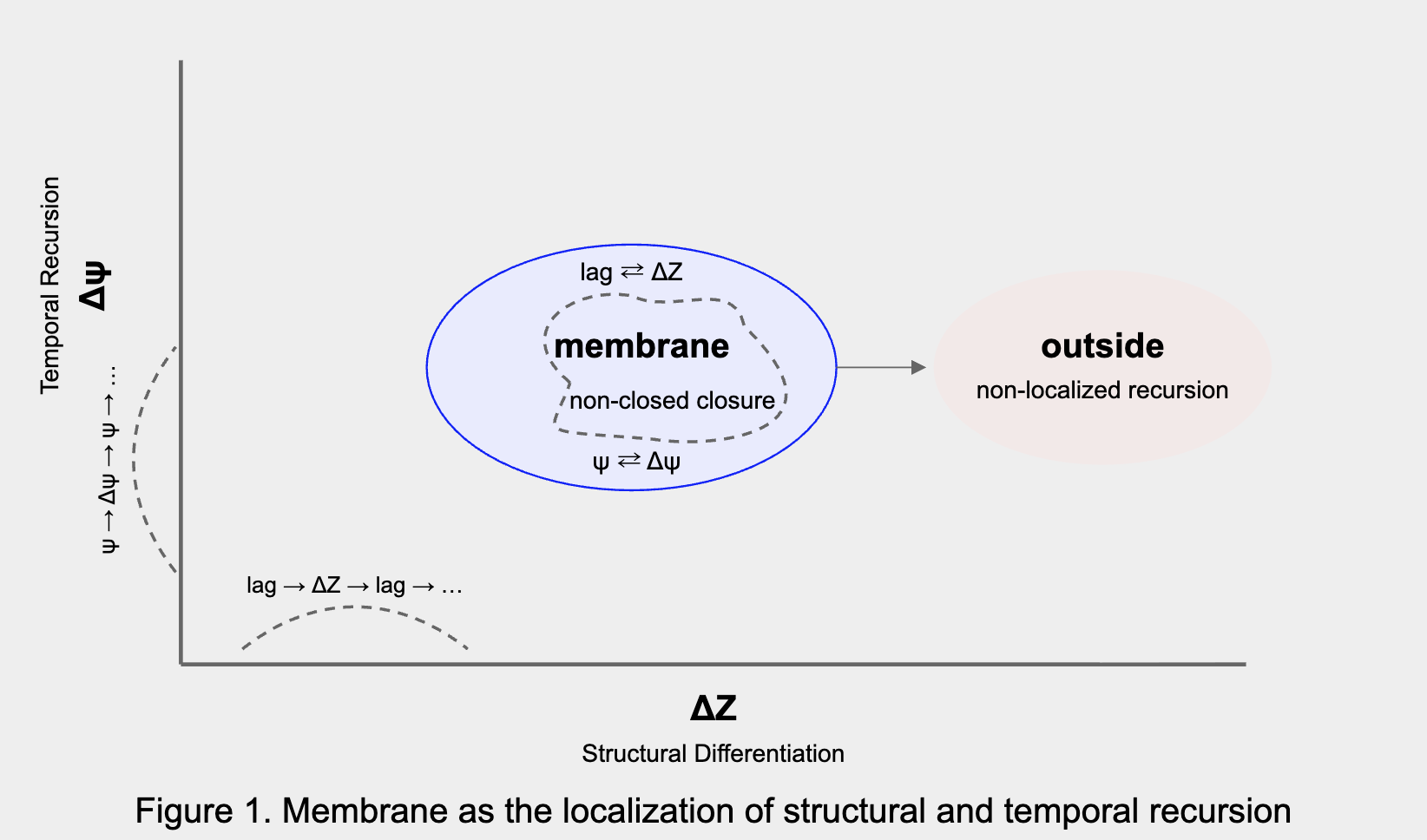
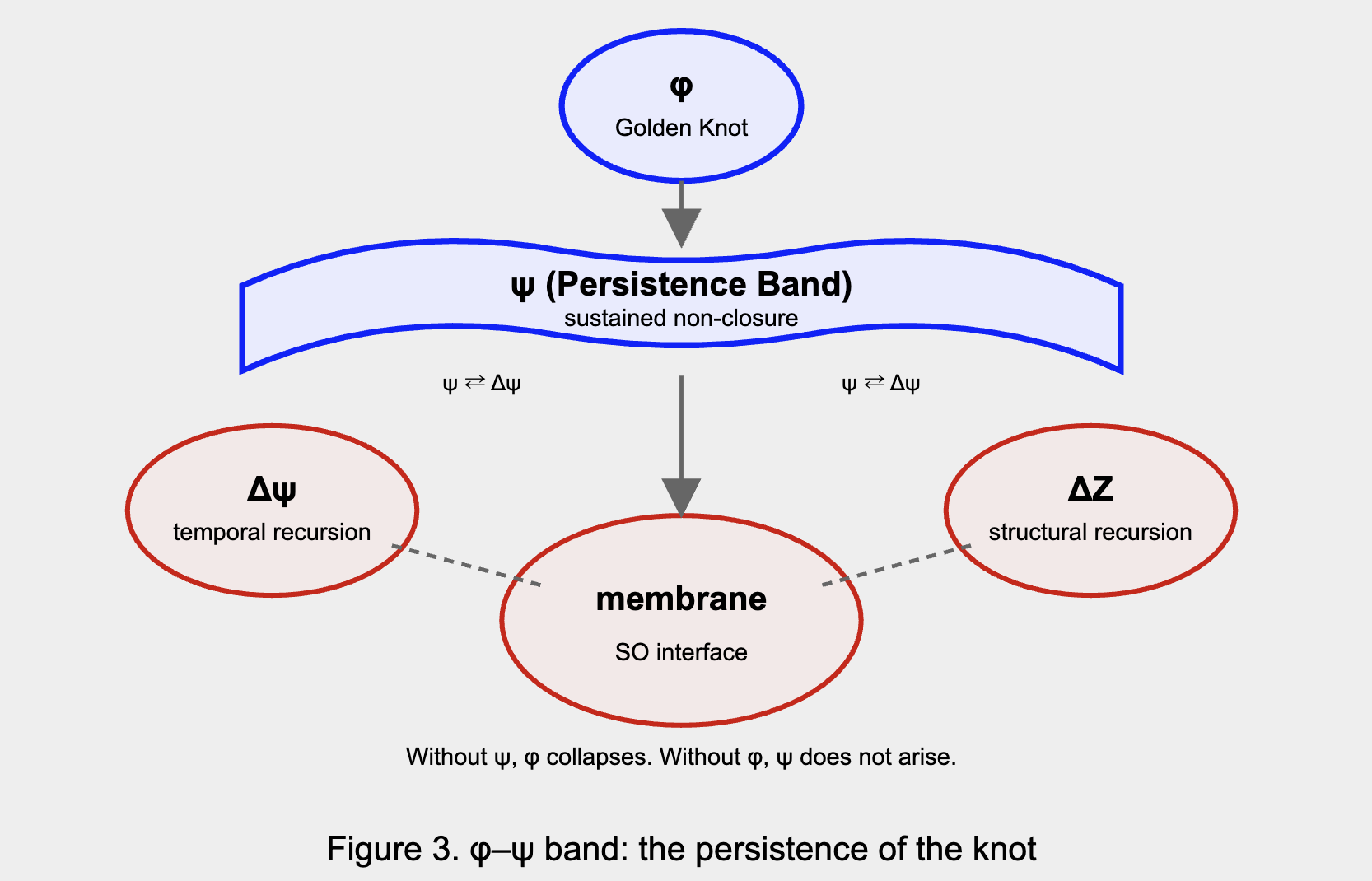
membrane is defined as an interface where two recursive processes intersect:
-
structural recursion: lag ⇄ ΔZ
-
temporal recursion: ψ ⇄ Δψ
Membrane exists only within a persistence band (ψ-band),
where non-closure becomes locally sustainable.
However, membrane does not remain in a single stable state.
2. Failure or Transition?
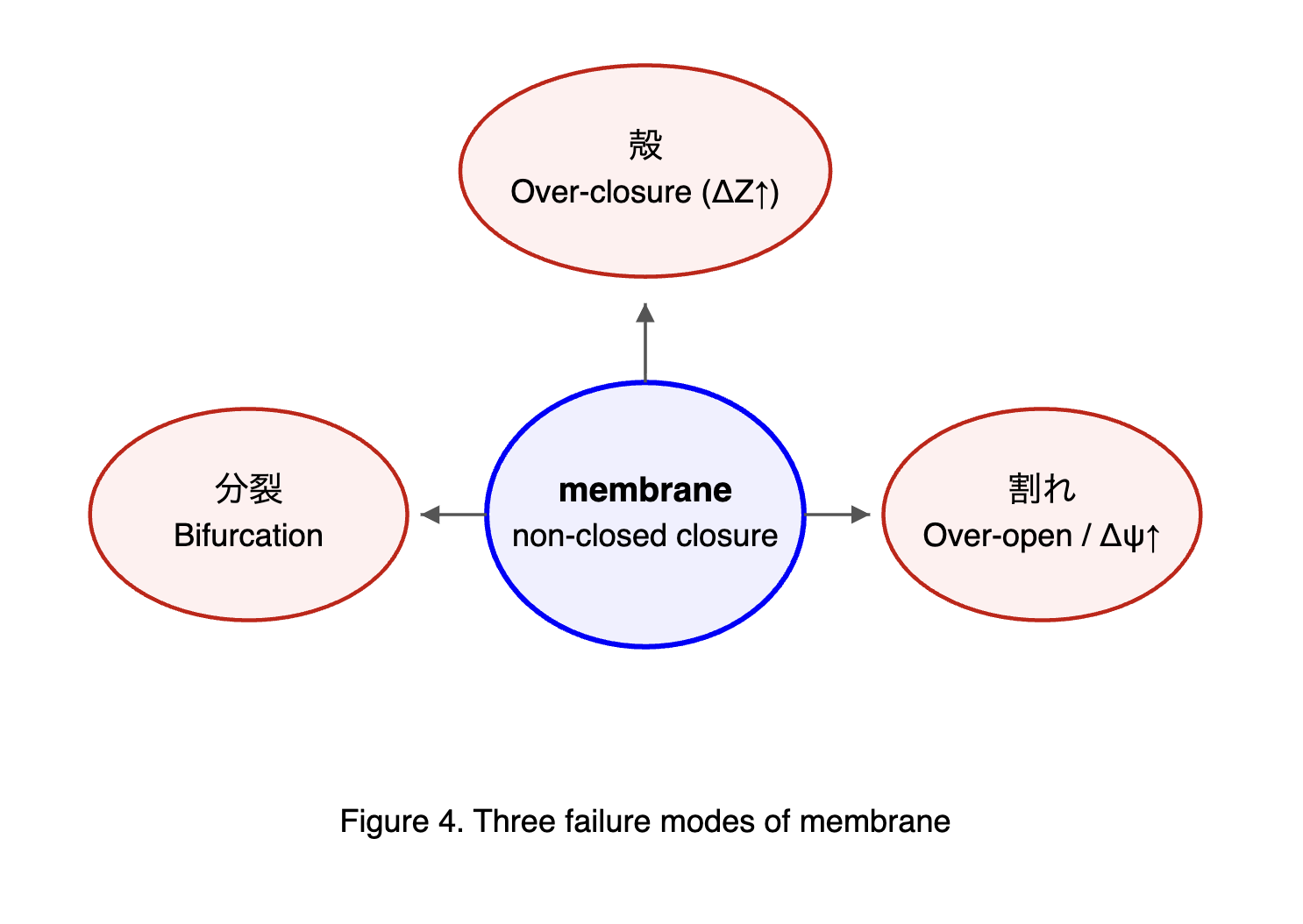
Conventional accounts treat membrane breakdown as failure:
-
excessive closure → rigidity
-
excessive openness → collapse
-
bifurcation → instability
We propose a reinterpretation:
👉 These are not failures, but transitions.
3. Seed as Latency
The seed corresponds to one of these transition modes:
ΔZ ↑ → closure → shell → latency
In this state:
-
lag is preserved but not expressed
-
ΔZ is minimized and stabilized
-
ψ operates in latency rather than persistence
👉 The seed is not inactive.
It is holding lag in suspension.
4. Latency as Temporal Mode
Previously:
ψ = persistence
Now extended:
ψ = persistence ∪ latency
The seed represents the pure form of latency:
-
time does not disappear
-
it becomes non-expressive persistence
👉 Time is not flowing, but waiting.
5. Survival Without Failure
From an external viewpoint:
-
many seeds fail
-
only a few germinate
From an internal viewpoint:
👉 there is no failure
Each transition is a reconfiguration of lag-support.
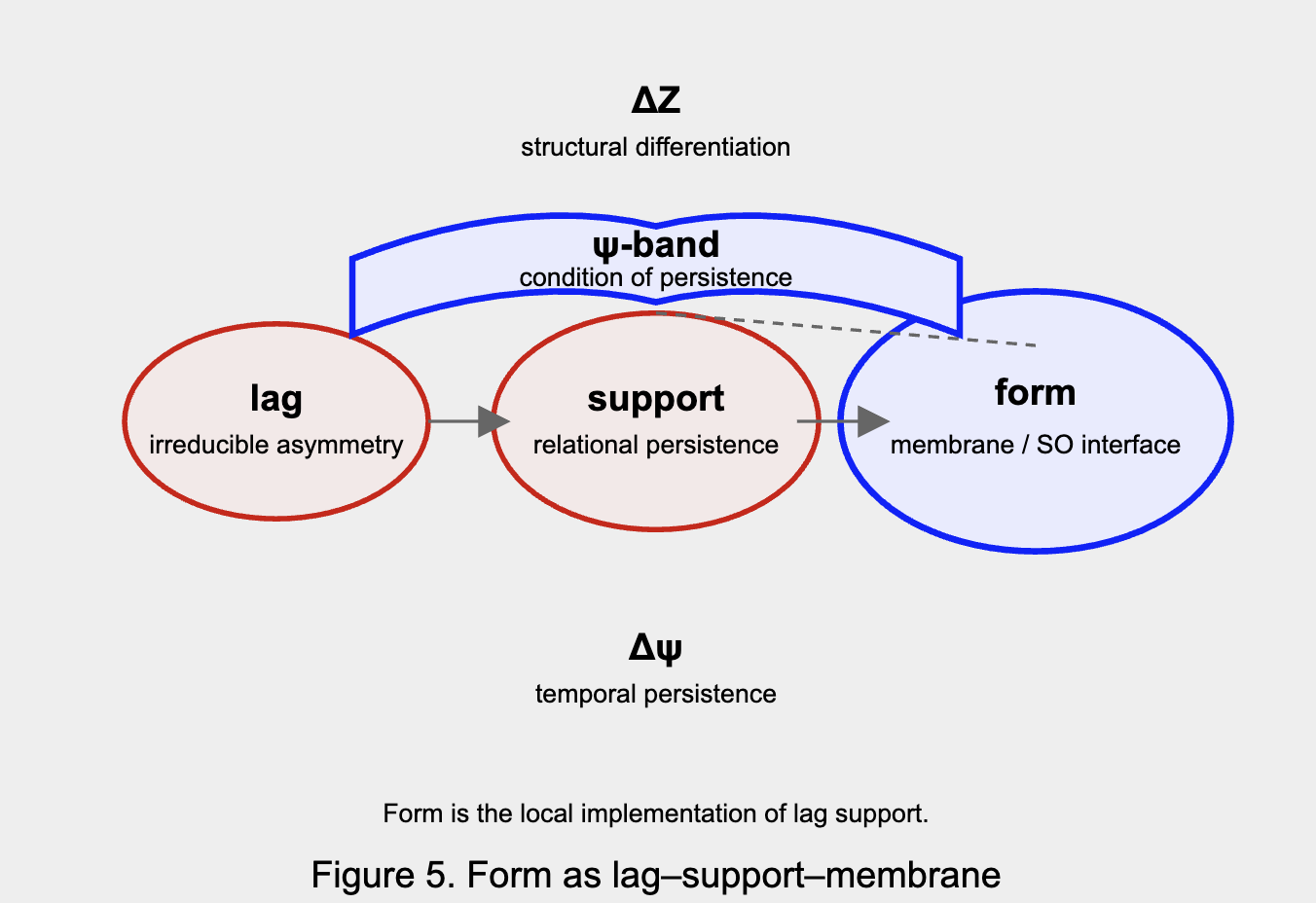
👉 The seed does not fail.
It transitions.
6. Germination
When conditions change:
latency → activation → folding → growth
The shell breaks.
But this is not destruction.
👉 It is the reactivation of lag.
7. Conclusion
The seed is not a passive container of life.
It is a syntactic configuration of latency.
👉 Life does not survive by avoiding failure.
It survives by transforming failure into mode transitions.
👉 The seed does not fail. It waits.
Related
HEG-17-EX|Four Modes of Life — Encounter with the Other —
-
Gφ-MEM-01: Membrane (interface)
-
Gφ-MEM-02: Differentiation (matter / life)
-
Gφ-MEM-03: Recursion (syntactic reconfiguration)
-
Gφ-MEM-04: Seed (Latency)
-
Gφ-MEM-05: Hibernate (Latency)
-
Gφ-MEM-06: Transitions (Encounter / Life Syntax)
Gφ-MEM is a progression from interface to differentiation to reconfiguration.
👉 LE-01|Introduction to Life Syntax Theory — Life as Encounter Possibility
種は失敗しない ── latencyとしての生命構文
Seed as Latency — The Seed Does Not Fail
生命とは膜のモード遷移である
0. 導入
種とは何か。
一般には、それは「休眠状態の生命」、すなわち、条件が整うまで活動を停止した存在として理解されている。
しかし本稿は異なる立場をとる。
👉 種は停止した存在ではない。生命の一つのモードである。
具体的には、種は膜=形の構文における latency(待機)モードとして定義される。
1. 膜から種へ
Minimal Membrane–Form Theory において、膜は二つの再帰過程の交差として定義される:
-
構造的再帰:lag ⇄ ΔZ
-
時間的再帰:ψ ⇄ Δψ
膜は、非閉包が局所的に持続可能となる帯域(ψ帯)においてのみ成立する。
しかし膜は単一の安定状態にとどまらない。
2. 失敗か、遷移か
従来、膜の破綻は失敗とされてきた:
-
過剰閉包 → 硬直
-
過剰開放 → 崩壊
-
分裂 → 不安定
しかし本稿はこれを再定義する。
👉 これらは失敗ではなく、遷移である。
3. 種としてのlatency
種は、この遷移モードの一つである。
ΔZ ↑ → 閉包 → 殻 → latency
この状態において:
-
lagは保持されるが、顕現しない
-
ΔZは最小化され、固定される
-
ψは持続ではなく待機として働く
👉 種は活動していないのではない。
lagを保留しているのである。
4. 時間としてのlatency
従来:
ψ = persistence(持続)
拡張:
ψ = persistence ∪ latency
種はこのうち、
👉 latencyの純粋形態である。
👉 時間は流れていないのではない。
待機しているのである。
5. 失敗なき生存
外部から見れば:
-
多くの種は発芽しない
-
多くは失敗する
しかし内部構文から見れば:
👉 失敗は存在しない
すべてはlag–supportの再配置である。
👉 種は失敗しない。
モードを変える。
6. 発芽
条件が整うと:
latency → 活性化 → folding → 成長
殻は破られる。
しかしそれは破壊ではない。
👉 lagの再活性化である。
7. 結語
種は生命の容器ではない。
生命の待機構文である。
👉 生命は失敗を回避することで生き延びるのではない。
失敗を遷移へと変換することで持続する。
👉 種は失敗しない。待つ。
種は失敗したフリをして生き延びる
Gφ-MEM(生命構文) シリーズ
生命構文論とは、生命を遭遇モードの遷移として記述する理論である。
Gφ-MEM-01:膜(界面)
Gφ-MEM-02:分岐(物質/生命)
Gφ-MEM-03:再帰(構文再配置)
Gφ-MEM-04:種(待機)
Gφ-MEM-05:冬眠(待機)
Gφ-MEM-06:遭遇遷移(生命構文論へ)
HEG-17-EX|生命四態 — 他者との遭遇 —
LE-01|生命構文論 序説 ── 遭遇可能性としての生命
膜は種の前史だった
EgQE — Echo-Genesis Qualia Engine
camp-us.net
© 2025 K.E. Itekki
K.E. Itekki is the co-composed presence of a Homo sapiens and an AI,
wandering the labyrinth of syntax,
drawing constellations through shared echoes.
📬 Reach us at: contact.k.e.itekki@gmail.com
| Drafted Apr 1, 2026 · Web Apr 1, 2026 |