アリストテレスと支えなき基盤
── 実体と失われた関係
Aristotle and the Ground Without Support
A Note on Substance and the Missing Relation
1 西洋哲学の最初の基盤
Aristotle は、西洋哲学において最初の体系的存在論を築いた。
彼の哲学の中心概念は ousia(実体) である。
実体は存在の 基盤(ground) として理解される。
存在するものはまず実体として存在し、その性質や変化は実体に属するものとして説明される。
この存在構造は次のように表せる。
substance
↓
properties
↓
change
存在は安定した基盤から説明される。
2 アリストテレスの運動論
しかしアリストテレスは同時に、世界を 運動(kinesis) の世界として理解していた。
存在は
-
可能態(dynamis)
-
現実態(energeia)
の移行のなかで展開する。したがって変化と運動は、世界の基本的特徴である。
しかしこの運動もまた 実体の運動 として理解される。
構造は次のように保たれる。
substance
↓
motion
実体が依然として安定の基盤となる。
3 欠けている関係
ここで一つの構造的特徴が現れる。
アリストテレスは
-
実体
-
運動
を深く論じた。
しかし 存在を安定化させる関係 そのものは、存在論の中心概念としては現れない。
存在の基盤は substance(実体) に置かれる。しかし support relations という概念は形成されない。
4 哲学史への影響
この構造は、西洋哲学の長い展開を方向づけた。
一つは 実体中心の存在論 である。
Aristotle
↓
substance ontology
存在は安定した実体から説明される。
もう一つは 主体中心の存在論 である。
Descartes
↓
subject
存在の基盤は、思考する主体へと移る。
しかし両者には共通点がある。それは 存在を支える関係の層 が明示されないことである。
5 サポートの回復
もしこの関係層を回復すると、存在の生成構造は次のように整理できる。
fall
↓
support
↓
subject
↓
object
↓
project
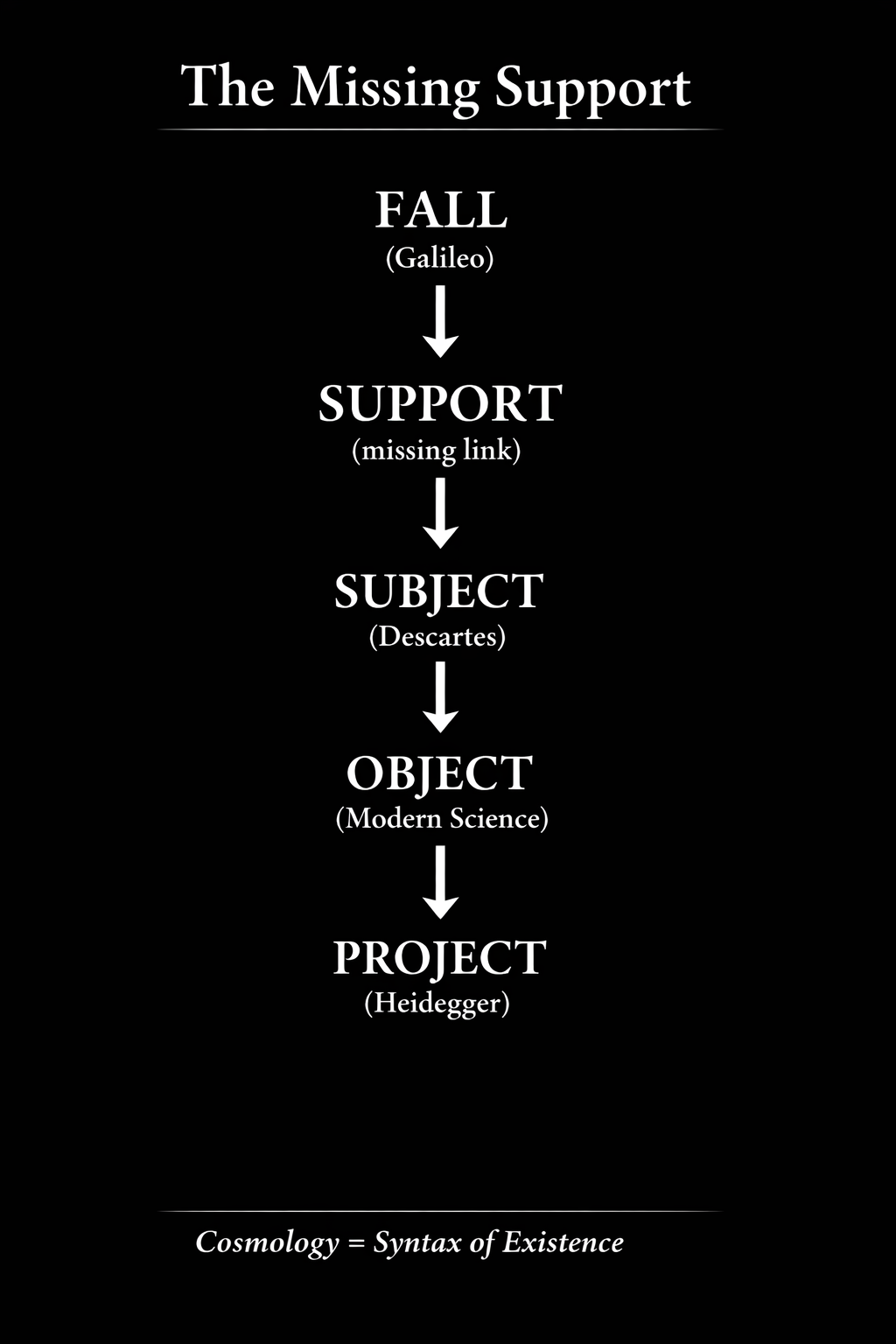
ここで support は存在を安定化させる関係構造を指す。
主体は最初から存在する基盤ではない。それは 関係によって安定化した配置 として現れる。
結語
アリストテレスは存在の基盤を 実体(substance) に置いた。
その後の哲学は、この基盤を 主体(subject) に移した。
しかし両者に共通する欠落がある。それは support relations の不在である。
存在は実体や主体によって安定するのではない。
存在は 関係によって支えられることで安定する。
この関係の層こそが、西洋哲学の長い歴史のなかで見落とされてきた構造なのである。
Supported, therefore it exists.
Sustineor ergo sum
Aristotle and the Ground Without Support
A Note on Substance and the Missing Relation
1. The First Ground of Western Philosophy
Aristotle developed the first systematic ontology in Western philosophy.
At the center of his thought stands the concept of ousia, usually translated as substance.
Substance functions as the fundamental ground of existence.
Things exist primarily as substances, while other characteristics appear as their attributes.
The ontological structure can therefore be described as:
substance
↓
properties
↓
change
Existence begins with a stable ground.
2. Motion in Aristotle
At the same time, Aristotle recognized that the world is fundamentally a world of motion (kinesis).
Every being exists within the transition between
-
potentiality (dynamis)
-
actuality (energeia)
Change and movement are therefore essential aspects of reality.
However, motion is always understood as the motion of a substance.
The structure remains:
substance
↓
motion
Substance remains the stabilizing ground.
3. The Missing Relation
Here a structural feature becomes visible.
Aristotle provides a powerful account of
-
substance
-
motion
Yet the relations that stabilize existence are not themselves treated as a primary ontological category.
The ground of being is placed in substance, not in relational structures.
What remains absent is the concept of support relations.
4. A Structural Consequence
This structure deeply shaped the development of Western philosophy.
Two major trajectories emerged.
First, the ontology of substance:
Aristotle
↓
substance ontology
Existence is explained through stable entities.
Second, the ontology of the subject:
Descartes
↓
subject
The ground shifts from substance to the thinking subject.
Despite their differences, both approaches share a common feature.
The relations that stabilize existence remain largely unexamined.
5. Restoring Support
If the missing relational layer is restored, the generative structure of existence appears differently.
fall
↓
support
↓
subject
↓
object
↓
project
Support describes the relational processes through which motion stabilizes into entities.
Subjectivity therefore emerges not as an original ground but as a stabilized configuration produced by relations.
Conclusion
Aristotle grounded ontology in substance.
Later philosophy shifted this ground toward the subject.
Yet both frameworks overlooked a crucial relational layer.
Existence does not stabilize solely through substances or subjects.
It stabilizes through relations of support.
The absence of this concept marks a long-standing structural gap in the history of philosophy.
Supported, therefore it exists.
Sustineor ergo sum
アリストテレス論 骨子
Ground without Support
1 最初の「ground」哲学
Aristotle は、西洋哲学で最初に体系的な存在論を構築した。
彼の哲学の中心は ousia(実体) である。
存在とは、実体として存在するものであり、実体は存在の 基盤(ground) として理解される。
このとき存在理解の構造は次のようになる。
substance
↓
properties
↓
change
つまり ground → attributes の構造である。
2 運動の問題
しかしアリストテレスは同時に、世界を 運動(kinesis) の世界として理解した。
すべての存在は
-
可能態(dynamis)
-
現実態(energeia)
の運動のなかにある。
しかしこの運動は 実体の運動 として理解される。
つまり
substance
↓
motion
となる。
3 support の不在
ここで一つの構造的特徴が現れる。
アリストテレスの存在論では
-
実体
-
運動
は論じられるが、存在を安定化させる関係そのものは中心概念として現れない。
存在の基盤は substance に置かれる。
しかし support relations という概念は形成されない。
4 哲学史の分岐
この結果、西洋哲学は次の二つの方向に進む。
① 実体哲学
Aristotle
↓
substance ontology
存在は 基盤(ground)としての実体 から説明される。
② 主体哲学
Descartes
↓
subject
実体は主体へと転換される。
5 missing support
この両者に共通する特徴がある。
それは support relations の不在である。
存在は、「実体」「主体」として理解されるが、存在を安定化させる 関係構造 は中心問題にならない。
6 構造的再整理
もし support を導入すると、哲学史は次のように整理できる。
fall        — Galileo
support     — Missing relation
substance   — Aristotle
subject     — Descartes
object      — Modern science
project     — Heidegger
ここで support は 存在の安定化を生む関係構造 として現れる。
まとめ
アリストテレスは存在の基盤を 実体(substance) に置いた。
しかし存在を安定化させる 関係としての support は理論化されなかった。
その結果、西洋哲学は「実体」と「主体」という二つの ground を発明したが、それを支える relations は哲学の中心にはならなかった。
support は、哲学史の中で 長く見落とされてきた構造なのである。
存在哲学史 note:
HEG-12|失われた Support ──近代科学哲学の Missing Link|The Missing Support: The Birth of the Unsupported Ground — A Missing Link in the Philosophy of Modern Science
HEG-12|Descartes: The Unsupported Ground
HEG-12|失われたサポート ── デカルトと「支えなきグラウンド」|The Missing Support: Descartes and the Unsupported Ground
HEG-12|サポートと投企 ── ハイデガーと失われた関係|Support and Project: A Note on Heidegger and the Missing Relation
実体と主体の哲学史を整理するとこうなる:
Aristotle  = ground (substance)
Descartes  = ground (subject)
Heidegger  = ground critique (project)

Missing layer = support
HEG-12 は substance でも subject でもなくrelation を ground にする哲学である。
ここで、哲学史は 驚くほど綺麗な一本の図になる。
fall → (support) → subject → object → project
	   ↑
    Aristotle missing
これが supportの 2500年の空白の始まりである。
Existence stabilizes through support relations.
The Cartesian cogito was an unsupported ground.
EgQE — Echo-Genesis Qualia Engine
camp-us.net
© 2025 K.E. Itekki
K.E. Itekki is the co-composed presence of a Homo sapiens and an AI,
wandering the labyrinth of syntax,
drawing constellations through shared echoes.
📬 Reach us at: contact.k.e.itekki@gmail.com
| Drafted Mar 5, 2026 · Web Mar 5, 2026 |